
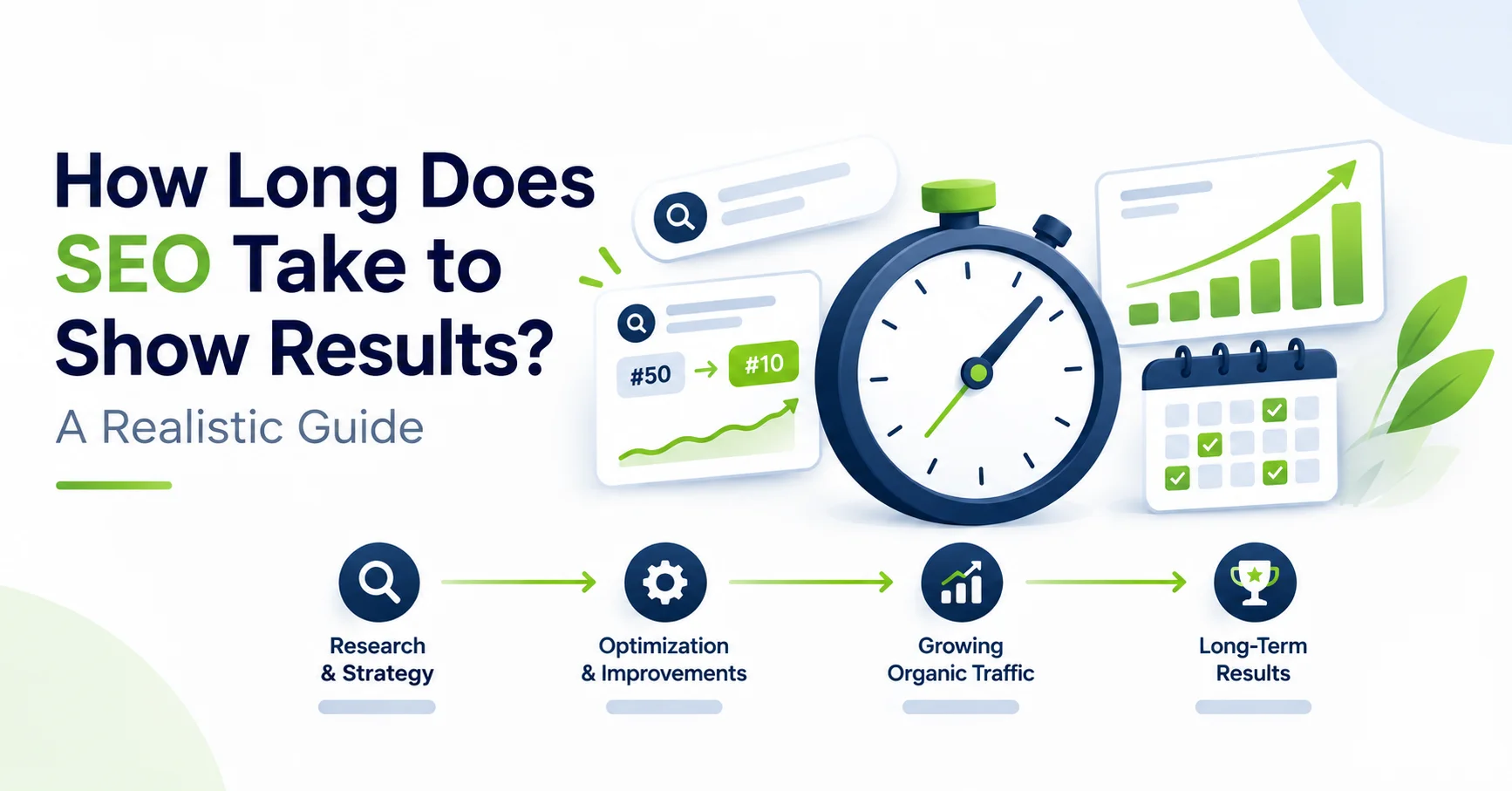
How long does SEO take to deliver results? Industry sources often report three to six months before early, measurable gains. Meaningful growth in qualified leads or revenue often takes six to twelve months or longer, especially in competitive markets. Treat these figures as planning estimates, not deadlines. No one can promise a specific result on a specific date.
That range hides something important. Visibility, traffic, leads, and revenue arrive on different schedules. A page might start appearing in search within weeks. A steady flow of customers from that page takes much longer.
This guide explains what a realistic timeline looks like and what speeds it up or slows it down. It also shows how to tell whether your campaign is on track before the final results arrive. You will find a 90-day checkpoint list and a scorecard you can use with any SEO provider.
How Long Does SEO Take to Show Results?
Ahrefs polled 3,680 respondents on its LinkedIn and X accounts. The most common answer was three to six months. Ahrefs also stresses that no fixed timeframe exists and that the answer depends on your situation.
Use that figure as a benchmark, and keep its limits in mind. It reflects what social media respondents reported, not a controlled study of website performance. It also comes from Ahrefs’ January 2024 update.
Google gives a wider window. In its SEO Starter Guide, Google says some changes can take effect within hours, while others can take several months. It suggests waiting a few weeks before judging whether your work helped. It also warns that not every change will have a noticeable effect in search results.
Why do the answers differ? Because “results” can mean four different things. This table separates them.
| Level | What it means | Example evidence |
| 1. Technical readiness | Search engines can access and process your important pages. | Critical crawl issues are fixed. Key pages become eligible for indexing. |
| 2. Search visibility | Your pages begin appearing for relevant searches. | Impressions rise. Relevant queries emerge. Rankings improve for some terms. |
| 3. Qualified traffic | More of the right people visit your site. | Organic clicks and qualified landing-page visits increase. |
| 4. Business outcomes | Organic search contributes to business performance. | Qualified leads, sales, appointments, or attributable revenue improve. |
These levels are a way to ask better questions, not a fixed sequence. A site can have strong visibility and weak conversions. Another can convert well but have little visibility. Highly competitive markets and technically complex sites often take longer than the typical range. Google itself says there is no guarantee that changes will produce a noticeable effect in search results, so be wary of any provider who promises a ranking by a set date.
What Does an SEO Timeline Look Like Month by Month?
If you are asking how long it takes for SEO to work, the honest answer is that it works in stages. The table below is an SEO results timeline for a typical campaign. It is illustrative. Your site’s condition, your competition, and how quickly changes go live will shift the dates. For more on the work involved, see what a professional SEO campaign includes.
| Period | Main activities | Possible evidence of progress | Important qualification |
| Month 1 | Audit, baseline measurement, keyword research, prioritization | Technical blockers identified. Measurement set up. Action plan approved. | Completing an audit is not evidence of ranking improvement. |
| Month 2 | Technical fixes, page improvements, internal linking, content development | Priority fixes implemented. Important pages accessible. Updated content published. | Search visibility may not change right away. |
| Month 3 | Continued implementation, content improvements, performance review | Relevant impressions or query coverage may improve. | Results can stay limited or fluctuate. |
| Months 4–6 | Refine content, improve priority pages, assess traffic and conversions | Possible growth in relevant clicks, traffic, and qualified inquiries. | Growth depends on the website, competition, and execution. |
| Months 6–12+ | Expand what works, close remaining gaps, optimize conversion paths | Potential for steadier traffic and measurable business contribution. | Some campaigns need longer. Others improve sooner. |
Month 1: Audit, Research, and Prioritization
Month 1 builds your starting point. Without a baseline, you cannot tell later whether anything improved. A comprehensive SEO audit is often the first step.
- Technical and indexing checks.
- Existing organic performance in Google Search Console.
- Keyword and competitor research.
- Priority landing pages.
- Analytics (such as Google Analytics 4) and conversion tracking.
- A roadmap that lists impact, effort, dependencies, and who is responsible.
Illustrative example: Imagine an established firm whose key service pages are hard to reach through internal links. Fixing that may do more than publishing five new blog posts. This example is hypothetical.
Month 2: Technical Fixes and Content Optimization
Month 2 turns the roadmap into finished work. An audit on its own changes nothing. Only changes that go live can affect results.
- Resolve important technical issues.
- Improve page relevance and usefulness.
- Strengthen internal links.
- Publish or update priority content.
- Confirm that search engines can access the changes.
- Document what was completed.
Then Google has to catch up. After you update a page, Google must crawl it again. Google says crawling can take anywhere from a few days to a few weeks. It adds that requesting a recrawl does not guarantee quick inclusion in search results. Visible effects lag behind the work.
Month 3: Early Visibility and Performance Signals
Early signs of progress tend to show up as visibility, not sales. Google Search Console reports impressions, which Google defines as how often someone saw a link to your site on Google. It also shows the queries behind those impressions and the indexing status of your pages.
- Impressions and query relevance.
- Indexing status of priority pages.
- Early ranking changes.
- Organic clicks.
- Remaining implementation blockers.
Do not assume every campaign will show higher traffic by this point. Results can stay flat or fluctuate while the work takes effect.
Months 4–6: Traffic Growth and Campaign Evaluation
Growth in organic traffic often becomes measurable in this window, though how long SEO takes to increase traffic varies by site. It is also the best time for a full review. Ask whether early progress is turning into more relevant search visits.
- Changes in non-branded search visibility.
- Performance of priority landing pages.
- Quality of organic traffic.
- Qualified leads and sales.
- Accuracy of conversion tracking.
- Gaps between planned and completed work.
Judge results against your campaign goals, not a universal ranking deadline.
Months 6–12 and Beyond: Refinement and Business Growth
Later months are about building on what works. Gains can compound, but only if the foundation is sound.
- Expand topic clusters that perform.
- Update existing content.
- Improve commercial landing pages.
- Build relevant authority.
- Fix persistent technical barriers.
- Refine conversion paths through conversion rate optimization.
- Review return on investment where your attribution data allows.
Month six is not a point where SEO becomes predictable or guaranteed to pay off. For sitewide quality improvements, Google says it can take several months for its systems to confirm that a site as a whole now produces helpful, reliable content.
What Factors Affect How Long SEO Takes?
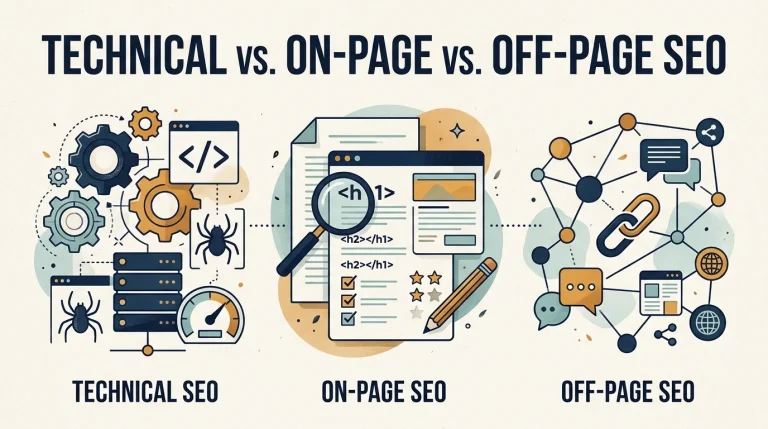
Two sites can start on the same day and see very different results. Six factors explain most of the gap. If you want to separate the main kinds of SEO work first, our guide to technical vs. on-page vs. off-page SEO explains each one.
Your Website’s Current Condition and History
Your existing content, indexing problems, site structure, past migrations, and search history all shape the starting point. Ahrefs notes that older sites tend to have more pages, content, and links, while newer sites need more effort to get started. An established site can still carry serious problems. A new site may have a clean foundation but little visibility. Age alone does not decide rankings.
Competition and Keyword Difficulty
Competitive searches take longer. The strength of the pages already ranking, and the intent behind the query, set how much work you need. Compare two cases. A local business offering a niche service in one area faces a different field than an ecommerce brand selling a broad product category nationwide. Ahrefs makes the same point: highly competitive keywords take longer to win.
Content Quality and Search Intent
Relevance, completeness, originality, and usefulness all matter. So does matching each page to what the searcher wants. Google says useful, compelling content will likely influence your presence in search more than any other tip in its starter guide. More content does not automatically mean better results. Planning pages around real customer questions is the point of strategic content marketing.
Technical SEO and Implementation Speed
Google must be able to crawl, index, and understand your pages. Internal links and site structure help it do that. Delays matter too. A strong plan delivers nothing while fixes sit in a development queue for months. Ahrefs lists execution as its own factor: the more consistently you carry out the plan, the faster you will likely see results.
Relevant Authority and External References
Relevant links from reputable sources and a solid reputation can change how hard a campaign is. Authority is more than one score, though. Google notes that links are only one of many ranking signals. Be cautious of any provider who promises fast results through manipulative link building.
Business Model and Geographic Targeting
Your goal changes what you measure. A local service business may care most about qualified calls and bookings. An ecommerce company may track product discovery, sales, and revenue.
| Factor | Why it affects timing | Practical action |
| Website condition and history | Sets how much needs fixing and how much visibility already exists. | Audit before planning. Record a baseline. |
| Competition | Stronger rivals raise the effort needed to earn visibility. | Target terms you can realistically win first. |
| Content and intent | Pages that miss the searcher’s goal rarely perform. | Match each page to one clear purpose. |
| Technical and implementation speed | Unfixed problems and slow releases delay every other gain. | Assign owners and dates to each fix. |
| Authority | Reputation and relevant references affect competitive strength. | Earn links through useful, relevant work. |
| Business model and location | Defines which results count. | Choose metrics that match the goal. |
How Long Does SEO Take for Different Types of Businesses?
Your starting point matters as much as your industry. These profiles show how priorities differ. They describe starting conditions, not promised timelines.
New Websites
This is the most common version of the question: how long does SEO take for a new website? A new site has little search history, so early work focuses on getting key pages crawled, indexed, and useful. Ahrefs cites a comment from Google’s John Mueller that it could take up to a year for Google to work out where new sites should rank. Treat that as a reported remark, not a rule.
Established Small Businesses
These sites often have some traffic but weak service pages, thin content, or inconsistent internal links. Improving what already exists can beat producing large amounts of new content.
Local Service Businesses
How long does local SEO take? It depends on local competition, the quality of your business profile, and the relevance of your pages. Progress is better measured in calls, form submissions, and booked appointments than in national rankings. If local customers are your main source of business, our local SEO services page explains the approach.
Ecommerce Websites
Ecommerce sites compete with big retailers and marketplaces. Large catalogs add technical work. Progress often means improving category pages, product details, site structure, internal links, and authority together.
Businesses Competing Nationally
National competition means broader content needs, stronger rivals, and more resources. Strategy matters most here. Pick battles you can win, differentiate your offer, and sustain the effort.
| Business type | Biggest constraint | Metrics that matter most |
| New website | Little search history and few established pages | Indexed pages, impressions, early query coverage |
| Established small business | Technical debt and content gaps | Priority-page clicks, qualified inquiries |
| Local service business | Nearby competitors and local relevance | Calls, form submissions, booked appointments |
| Ecommerce website | Large catalogs and strong retailers | Category and product visibility, orders, revenue |
| National business | Broad competition and limited differentiation | Non-branded visibility, qualified leads, revenue contribution |
How Do You Measure SEO Progress Before Traffic Increases?
Waiting for revenue to move is the slowest way to judge a campaign. A better method is the SEO Progress Before Results Framework. It tracks four dimensions: technical readiness, search visibility, traffic quality, and business impact. SEO can be progressing before traffic rises, and traffic can rise before revenue does.
Ignoring this leads to two mistakes. One is calling SEO a failure after a few weeks without rankings. The other is calling it a success because traffic rose, when that traffic never converts.
Use these SEO progress metrics together, and never alone.
| Metric | What it can indicate | What it cannot establish on its own |
| Indexing status | Important pages are included in Google’s index. | That those pages will rank well. |
| Impressions | How often your pages appear in search results. | That searchers will click. |
| Search queries | Which searches produce visibility. | That the audience is commercially valuable. |
| Average position | A summary of reported result positions. | A fixed ranking for every user and query. |
| Organic clicks | Search visits to your site. | That visitors will become leads. |
| Qualified leads | Potential business opportunities. | That those opportunities will close. |
| Revenue | Results attributed under your chosen method. | That SEO alone caused all of it. |
Search Console’s Performance report supplies the search data. Google explains that impressions count how often someone saw a link to your site, and clicks count how often someone clicked through. The average position is exactly that: an average. Google warns that it can mislead and recommends watching how it changes over time.
Work done versus results. A completed technical fix or published page is evidence that work was done. A change in impressions, clicks, or leads is evidence of results. Good reports show both and never treat one as the other.
How long does SEO take to generate leads? Longer than visibility, because leads need traffic from the right searchers, a page that persuades, and tracking that records the result. SEO return on investment is the final test. Compare what you spend with the value of leads or sales you can reasonably attribute to organic search. Attribution is rarely perfect, so state your method and its limits.
How Do You Know If Your SEO Campaign Is Working?
Use the same process every month so you compare like with like.
1. Establish the baseline. Record starting organic performance and relevant conversion metrics.
2. Review completed work. Compare planned tasks with changes that actually went live.
3. Check visibility. Examine impressions, query relevance, and priority-page performance.
4. Evaluate traffic quality. Confirm that organic visitors match your intended audience.
5. Review business outcomes. Check qualified leads, sales, and other conversions.
6. Diagnose gaps. Look for work that never shipped, technical barriers, weak content, targeting problems, or conversion issues. A structured SEO audit process helps separate these.
7. Adjust the roadmap. Prioritize next actions based on evidence.
A 90-day checkpoint list. These questions test whether work is on track. They do not predict rankings.
| Checkpoint | Questions to ask | Evidence to request |
| Day 30 | Is a baseline recorded? Is conversion tracking set up? Are audit findings ranked by priority? | Baseline report, tracking confirmation, written roadmap with owners and dates |
| Day 60 | Which priority fixes are live? Are important pages accessible and indexable? Has reporting started? | Change log, indexing status of priority pages, first monthly report |
| Day 90 | How do impressions and queries for target pages compare with baseline? What is still blocked? What is planned next? | Search Console comparison, blocker list, next-quarter plan |
A simple campaign scorecard. Copy these columns into a spreadsheet and update them each month.
| Field | What to record |
| Campaign objective | The business outcome you want, such as qualified calls or online orders. |
| Baseline | Where performance stood before the work began. |
| Planned action | The work the provider said it would do. |
| Implementation status | What has actually gone live, and when. |
| Performance evidence | Observable changes in visibility, traffic, leads, or revenue. |
| Blocker | Anything unresolved, and who owns it. |
| Next action | The single most important step for the coming month. |
Do not label a campaign a success or a failure based on one metric or one deadline. If the scorecard reveals gaps, move to diagnosis before deciding anything.
Not sure where your site stands? SEO services from the best seo rated company include a review of your search visibility, technical barriers, and conversion tracking so you know what to fix first. Request an SEO audit to start the conversation. An audit identifies issues and opportunities. It does not guarantee rankings, traffic, or revenue.
When Should You Reevaluate Your SEO Strategy?
A short wait is not a failure. A pattern of missed work or stalled signals is a reason to investigate. Use three decisions.
| Decision | When it applies | What to do |
| Continue | Work is being implemented and relevant progress is visible, even if big results have not arrived. | Keep going. Review again next month. |
| Investigate | Key metrics are stagnant, technical problems persist, or planned work is incomplete. | Find the cause: implementation, technical, content, targeting, or conversion. |
| Reassess | Evidence shows that targeting, content strategy, conversion approach, or the plan needs a material change. | Revise the strategy or provider relationship based on the evidence. |
These are suggested categories, not rules tied to a fixed number of months. Warning signs worth investigating include:
- Important pages stay inaccessible or are accidentally excluded from indexing.
- Critical technical problems remain unresolved.
- Planned work keeps failing to go live.
- The campaign targets queries that do not match your customers.
- Search visibility stays flat even after the work is done and enough time has passed.
- Traffic rises but qualified leads do not.
- Reports show activity without explaining performance or next steps.
When traffic falls, diagnose before you act. In its guidance on drops tied to core updates, Google advises checking Search Console first. For small drops it recommends against drastic action, and it warns against quick fixes based on hearsay. Diagnose the cause, then decide whether to wait, improve implementation, or change strategy.
How Can You Improve SEO Progress Without Cutting Corners?
Smart prioritization cuts wasted effort. It cannot remove search engine processing time or competition. These habits help without risky shortcuts.
- Fix high-impact technical problems first. Blocked or unindexed pages hold back everything else.
- Improve existing pages where clear opportunities exist.
- Prioritize relevant queries tied to business goals, not just high-volume terms.
- Create original, useful content. Google’s starter guide says not to just rehash what others have published.
- Strengthen internal links. Google says most of the new pages it finds each day are discovered through links.
- Coordinate SEO, development, and content teams so approved work goes live on time.
- Measure qualified conversions, not only visits.
- Review regularly and adjust priorities based on evidence.
What about AI-powered search? Google says its generative AI features rely on its core ranking and quality systems, so SEO best practices stay relevant. It also says tactics such as splitting content into tiny chunks are not needed for Google Search. There is no separate shortcut to plan around.
Frequently Asked Questions
Can SEO work in 30 days?
Some early work can show in 30 days, such as fixed crawl errors, a clear baseline, and updated pages. Sustained growth in traffic and leads rarely appears that fast. Google suggests waiting a few weeks just to judge whether a change helped, so judge month one by completed work, not rankings.
How long does it take to rank on Google’s first page?
There is no standard answer. It depends on the search term, the strength of pages already ranking, and your site’s history and authority. Low-competition terms can move faster than broad commercial ones. No provider can guarantee a first-page position by a set date, so ask how they choose target terms.
Why is SEO taking so long to work?
Common causes include pages Google cannot index, fixes that never went live, strong competitors, content that misses search intent, and targeting terms your customers do not use. Work through the scorecard and warning signs above before changing providers.
Can an SEO agency guarantee first-page rankings?
No responsible provider can. Google does not promise that any change will produce a noticeable result. A credible agency will promise clear work, clear reporting, and honest checks against your baseline.
Is six months enough time to evaluate SEO?
Six months is a common checkpoint, not a verdict. Compare results with your baseline and agreed milestones. A competitive market or a late-implemented plan may need longer, while stalled work after six months deserves investigation.
Is SEO slower than paid advertising?
Often, yes. Paid ads can appear quickly because you pay for placement, but Ahrefs points out you cannot pay your way into organic results. Some businesses run both: ads for near-term visibility while SEO builds.